


Name the SKU and the batch
A 4 oz tin is not an 8 oz tin. Cost one product at a time, and count only the units you can actually sell at the end of the run.
Batch size is the number you can sell, not the number you poured. Waste comes off in step five.
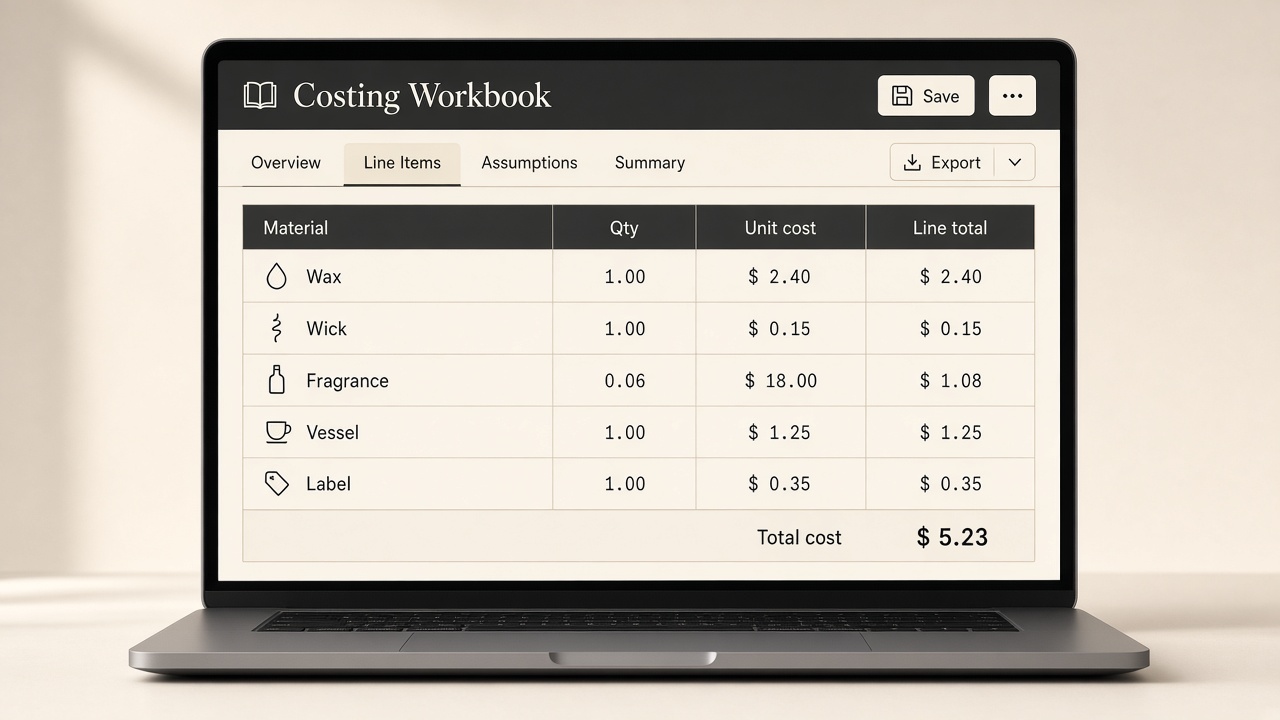
Everything you bought for the batch
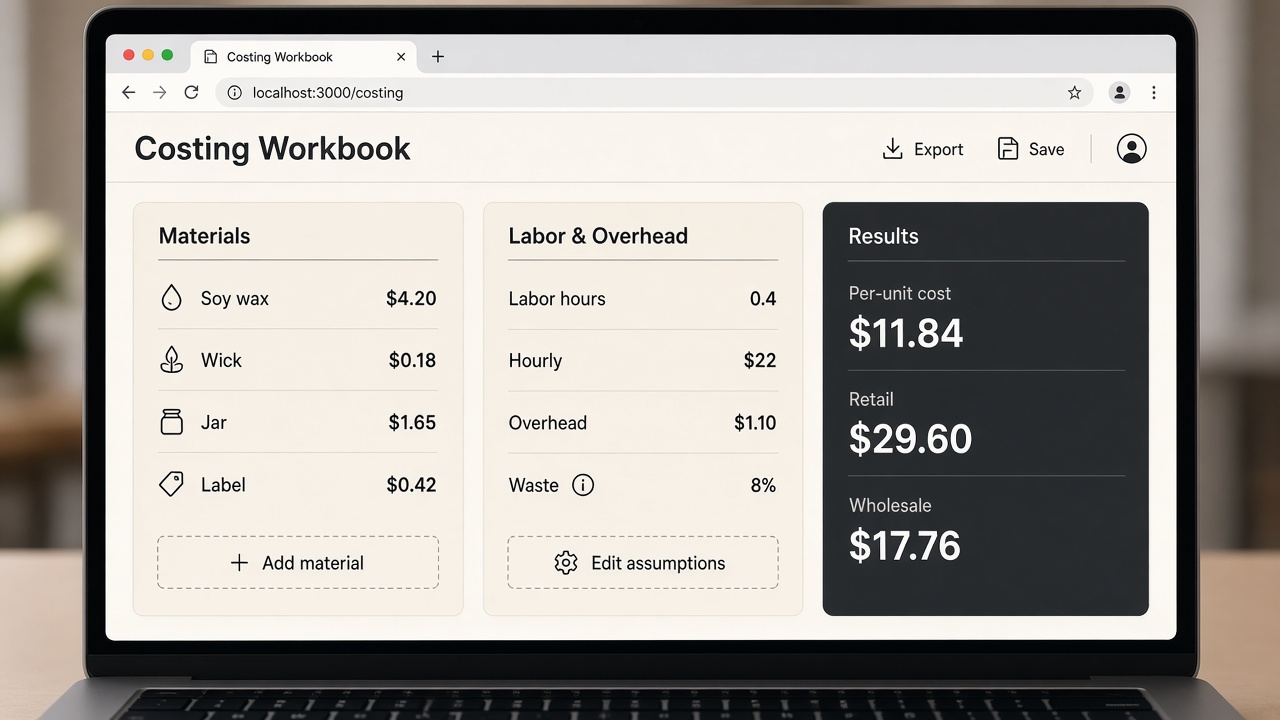
Wax, oil, jars, wicks, labels, cartons, the tape. Enter what the quantity cost you, not what one unit used. The sheet divides.
Buy in bulk and the line still divides correctly: enter what the whole quantity cost you, and how much of it this batch used.
Put a number on your hours
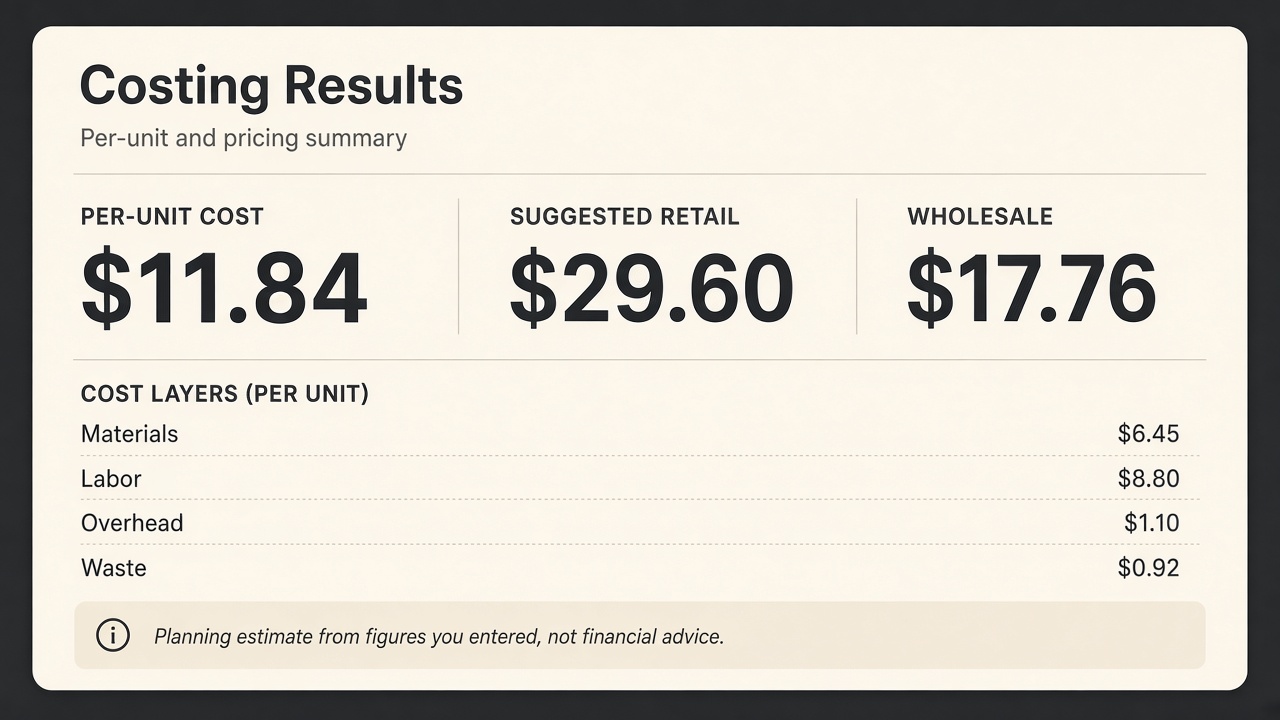
Pour, cure checks, labeling, packing, cleanup, the supply run. If you would not do it for free, it belongs in here.
Most makers undercount by leaving out the supply run, the label printing, and the cleanup. Put the whole afternoon in here.
The studio keeps running either way
Rent, insurance, the website, tools that wear out. Take the monthly total and spread it across the units you normally finish in a month.
If you do not know your monthly units, use last month. A rough number beats leaving overhead out of the price.
The jar that cracked
Nothing runs at 100 percent. If one in twenty is unsellable, the other nineteen carry that cost.
Waste is not just breakage. A candle that frosted, a mug that warped, a soap cut short: if you would not sell it, it counts.
Packing, booths, and the platform cut
Shipping supplies ride on every unit. Booth fees ride on the batch you brought. Platforms and card processors take a percentage of the sticker.
Etsy, Faire, Square, and card processors all take a slice of the sticker, not of your profit. That is why the sticker is solved backwards.
The number you can defend
Retail is solved so that after the platform and the card take their cut, you keep the margin you asked for.
Price ladder
| Sticker | Why | You keep | Margin | Batch profit |
|---|
If something moves
| Change | New unit | Margin at this sticker |
|---|