
The booth fee belongs on every unit you sell.
A slow Saturday still cost you the table, the drive, and the candles that rode home. Put those on the units that actually sold.

Price the day, then the jar.
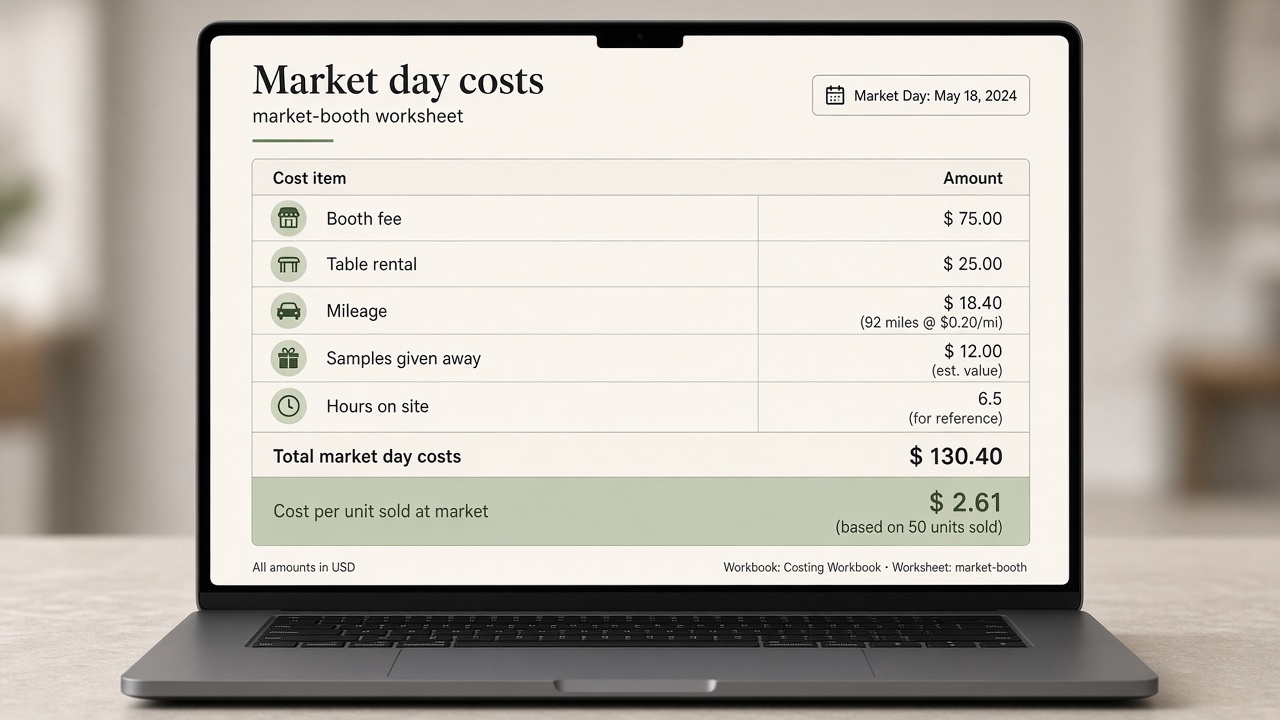

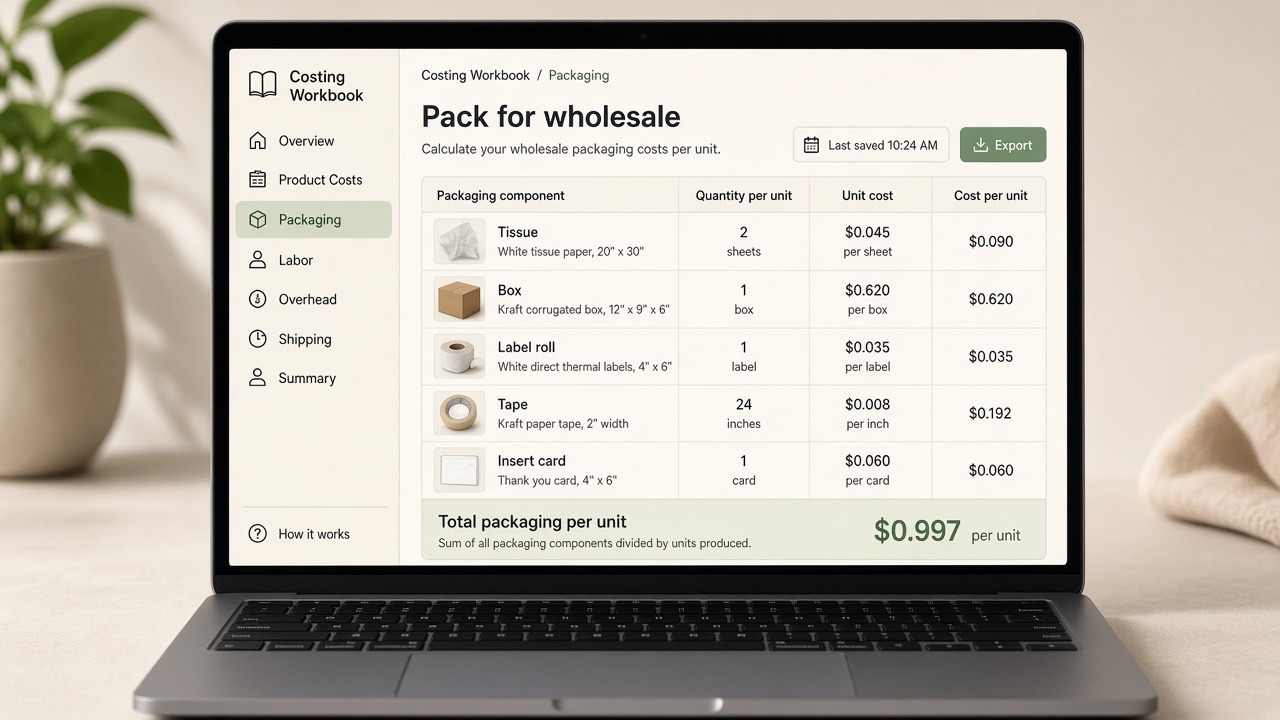
Packing for a table is a cost.
Bags, tissue, and the crate you haul still sit on every unit you put out.
Put the table in the unit.
Put booth fees, packing, and the jar that cracked into the unit before you pack the van.


Card fees at the table still count.
Square and cash still have a cost. Processing belongs in the unit the same way wax does.
Price the table before you pack.
Booth fee
Enter the table fee on the batch. The workbook spreads it across finished units.
Unsold inventory
What rides home still cost materials and time. Put that waste on the units that sold.
Travel and parking
Gas and parking for the day sit on the units you put on that table.
Hours at the table
Turn a messy table of costs into one per-unit number you can take to the market.
Price the table before you pack the van.


I finally saw labor, booth fees, and Etsy take their cut in one place. The $12 candle was making $1.40.
The Saturday booth was $85. Split across 40 bars, that is $2.12 I had never put in the soap.

I finally saw labor, booth fees, and Etsy take their cut in one place. The $12 candle was making $1.40.
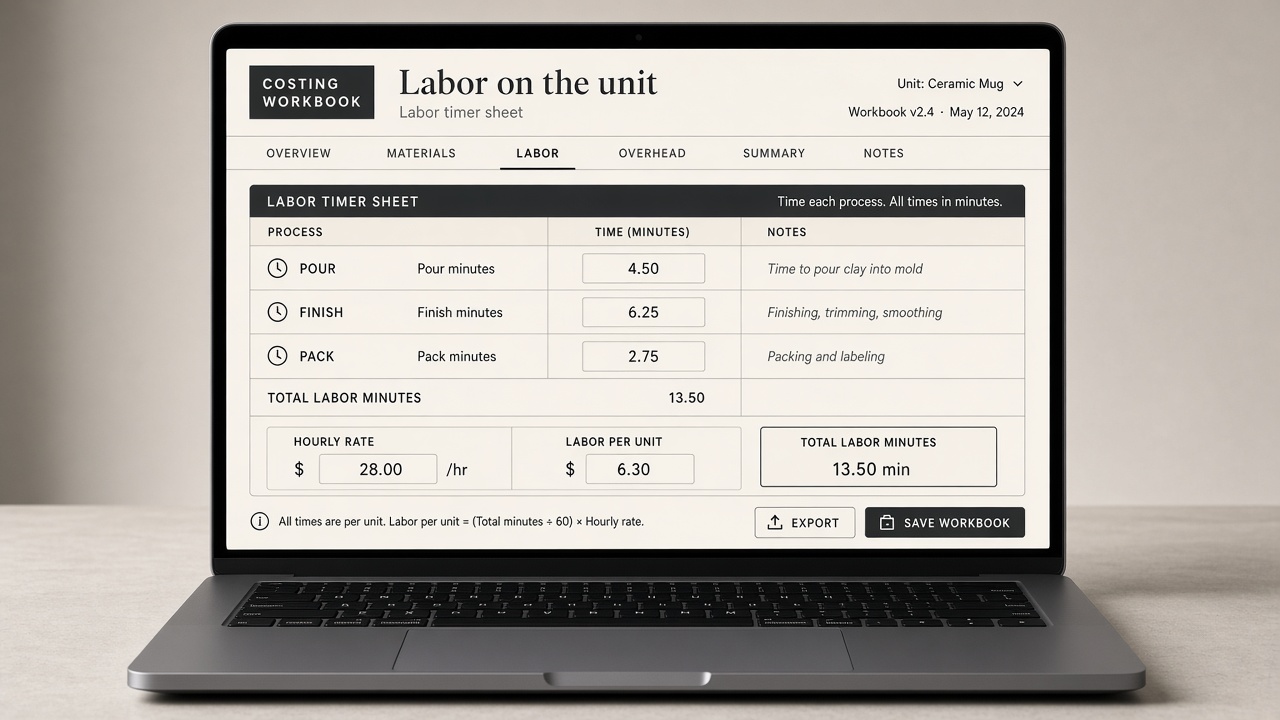
Bench time on a pair of earrings was 40 minutes. At $22 an hour that is $14.67 before a stone went in.
Questions makers actually ask