
Don’t take 50% off a number you guessed.
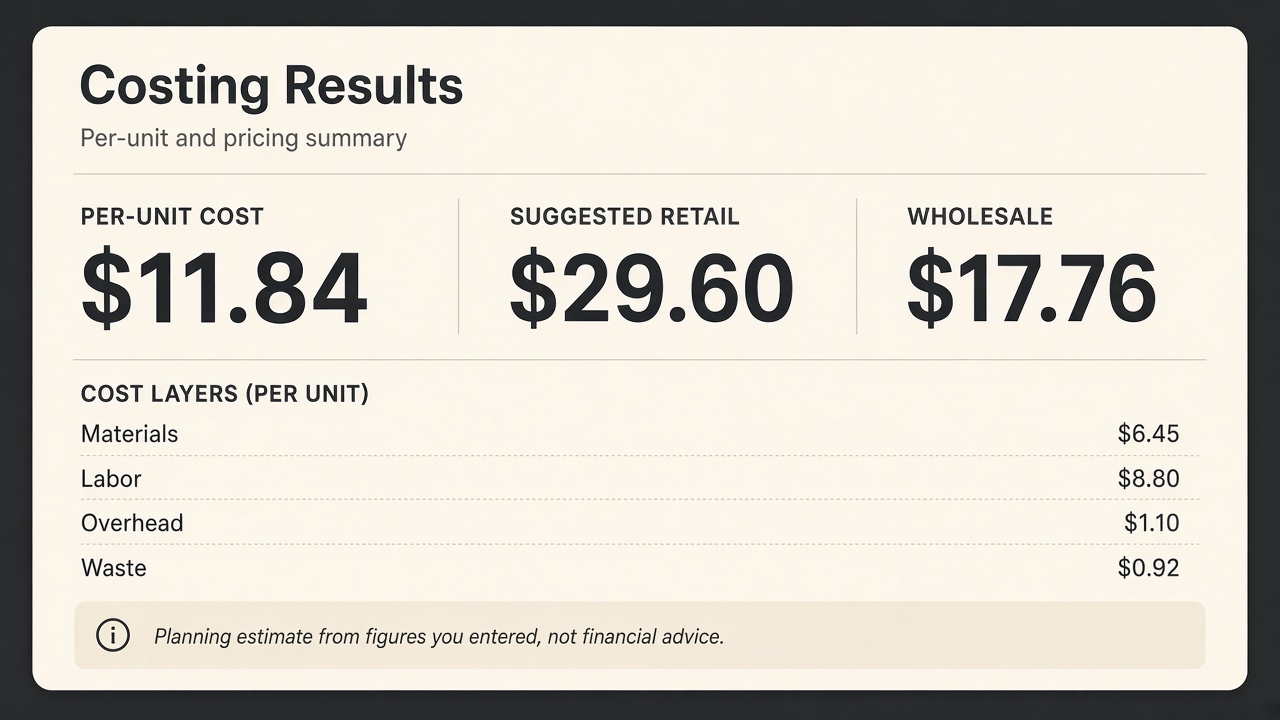
A wholesale price has to cover packing for shops, your time, and the unit itself. The workbook walks that math so you can quote a number you can actually fill.

Wholesale is its own price.

Packing for a shop is a cost.
Tissue, boxes, and labels for a retailer are not free. Put them on the unit before you quote.
Retailer margin sits on top.
If the shop needs 50% of retail, wholesale has to start from a real unit cost, not a copied sticker.
Your time still belongs in wholesale.
Pouring, packing, and invoicing for a shop order is labor. It goes on the unit the same way materials do.


Terms and freight eat margin.
Net 30 and shipping to the shop come off the wholesale price after you think you are done.
Quote a number you can fill.
Start from the unit, not the shop.
Know per-unit cost, then set wholesale that covers packing, labor, and the shop's cut.
Don't skip overhead.
Studio rent, insurance, and software still sit on every unit you send to a retailer.

Shop terms
Net 30, damaged goods, and freight are not afterthoughts. Write them into the price.
Reorder math
If you cannot make the next batch at that wholesale number, do not take the order.
Set a wholesale number that holds.
I finally saw labor, booth fees, and Etsy take their cut in one place. The $12 candle was making $1.40.

The shop wanted wholesale at half of $28. After kiln power, the unit was $11.20. Half of $28 would have been a gift.

I finally saw labor, booth fees, and Etsy take their cut in one place. The $12 candle was making $1.40.

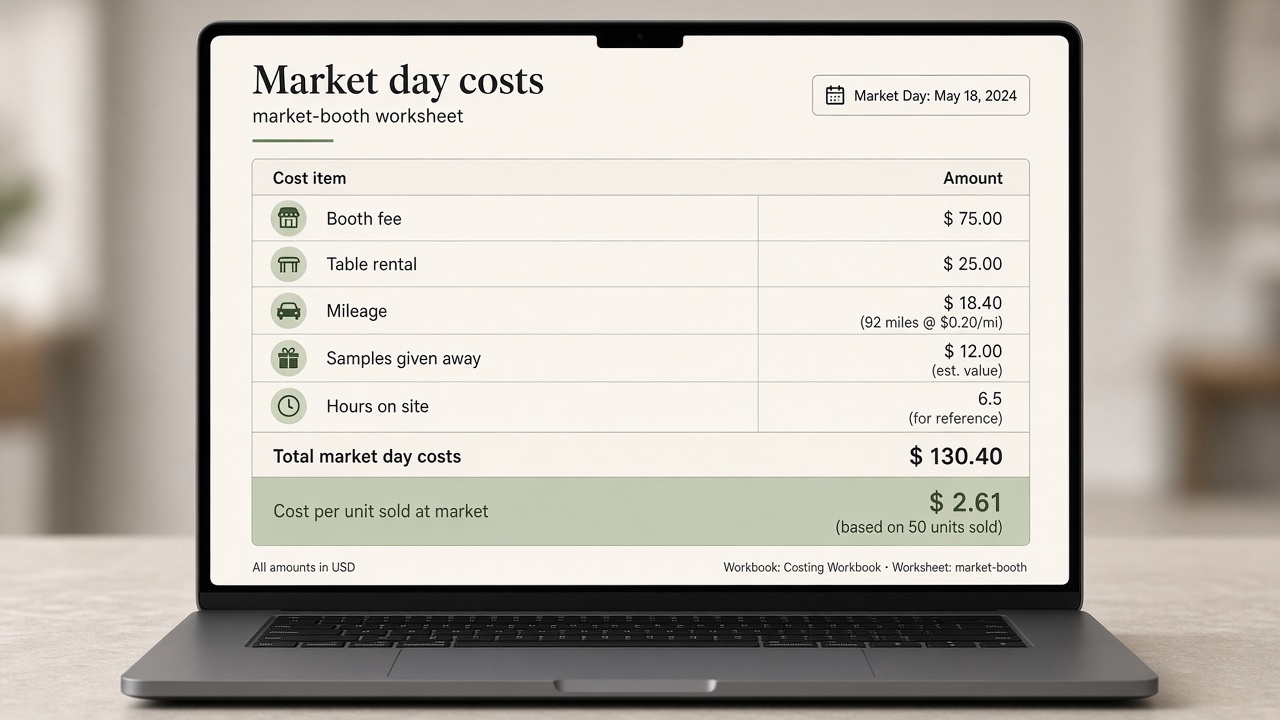
The Saturday booth was $85. Split across 40 bars, that is $2.12 I had never put in the soap.
Questions makers actually ask